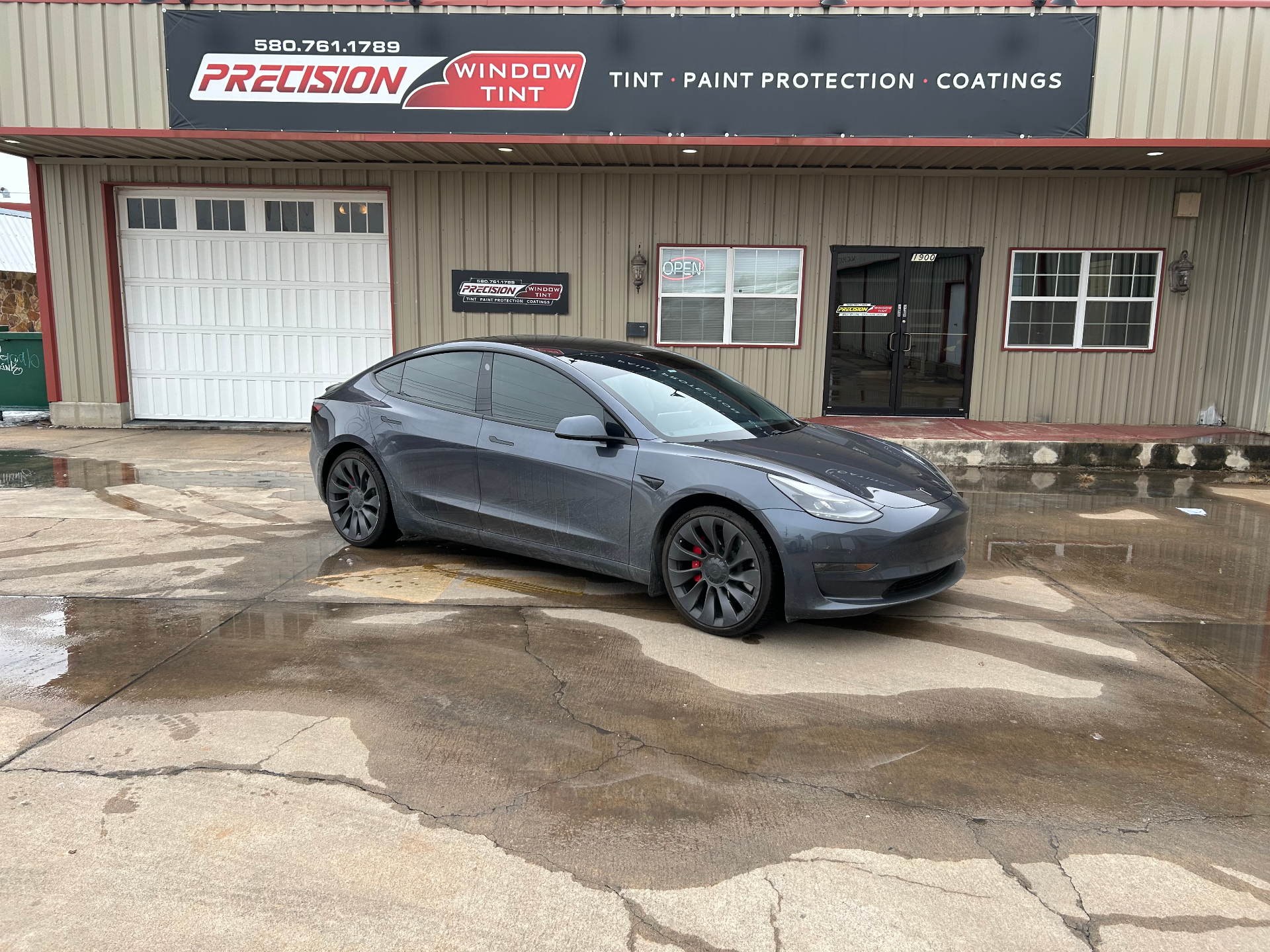
Oklahoma Window Tint Laws
Know the law before you tint. Here's a clear breakdown of Oklahoma's window tint regulations so you can make informed choices for your vehicle.
Disclaimer: Tint laws can change. This information is current to the best of our knowledge but should not be considered legal advice. Always verify the current text of Oklahoma Statute 47 § 12-422 and the rules published by the Oklahoma Department of Public Safety or Service Oklahoma before making a decision.
Oklahoma Tint VLT Requirements
Windshield
A non-reflective strip is allowed along the top. It may not extend below the AS-1 line or more than 5 inches down, whichever is closer to the top, and it cannot be red or amber.
Front Side Windows
Combined glazing and film must allow at least 25% light transmission under the statute's general exception.
Back Side Windows
Also held to the 25% minimum light transmission standard under the general exception — not unlimited darkness.
Rear Window
Same 25% minimum light transmission standard applies under the general exception.
Reflectivity
Luminous reflectance of the glazing and film combined may not exceed 25%.
Pre-1996 Exception
Oklahoma Statute 47 § 12-422 contains a narrower exception allowing certain windows behind the driver on some pre-1996 vehicles down to 10% light transmission when the vehicle has compliant outside mirrors on both sides.
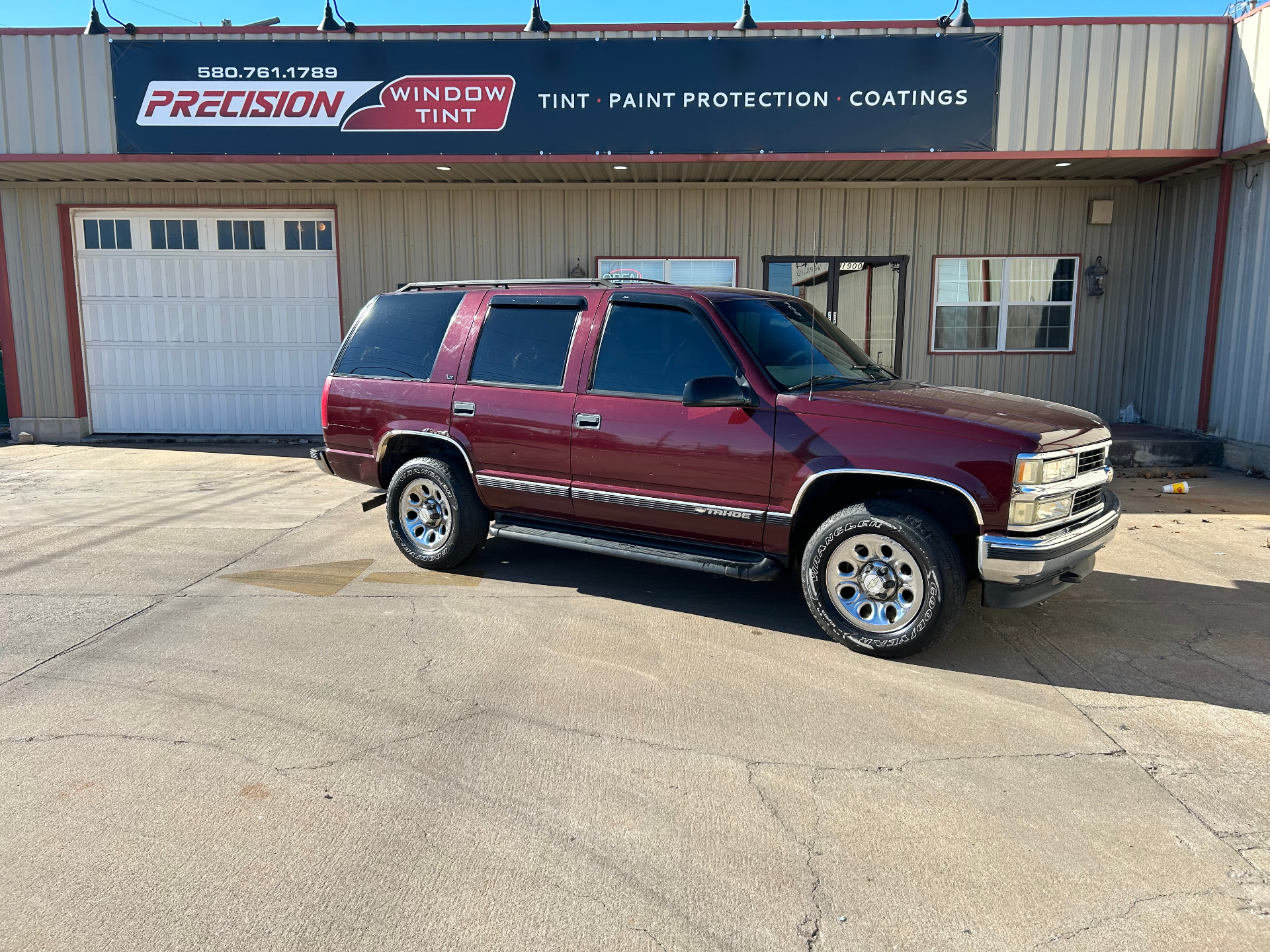
Pictured: Legal window tint installed at Precision Window Tint. Film selected to stay within Oklahoma's light transmission and reflectance limits while still cutting heat and glare.
Not sure which shade works for your vehicle? We'll help you choose a compliant option based on current rules. View our window tint options or request a free quote.
Oklahoma Tint Laws FAQ
Get Legal, Professional Tint
We'll help you choose a compliant option based on current rules. Call or request a free quote.